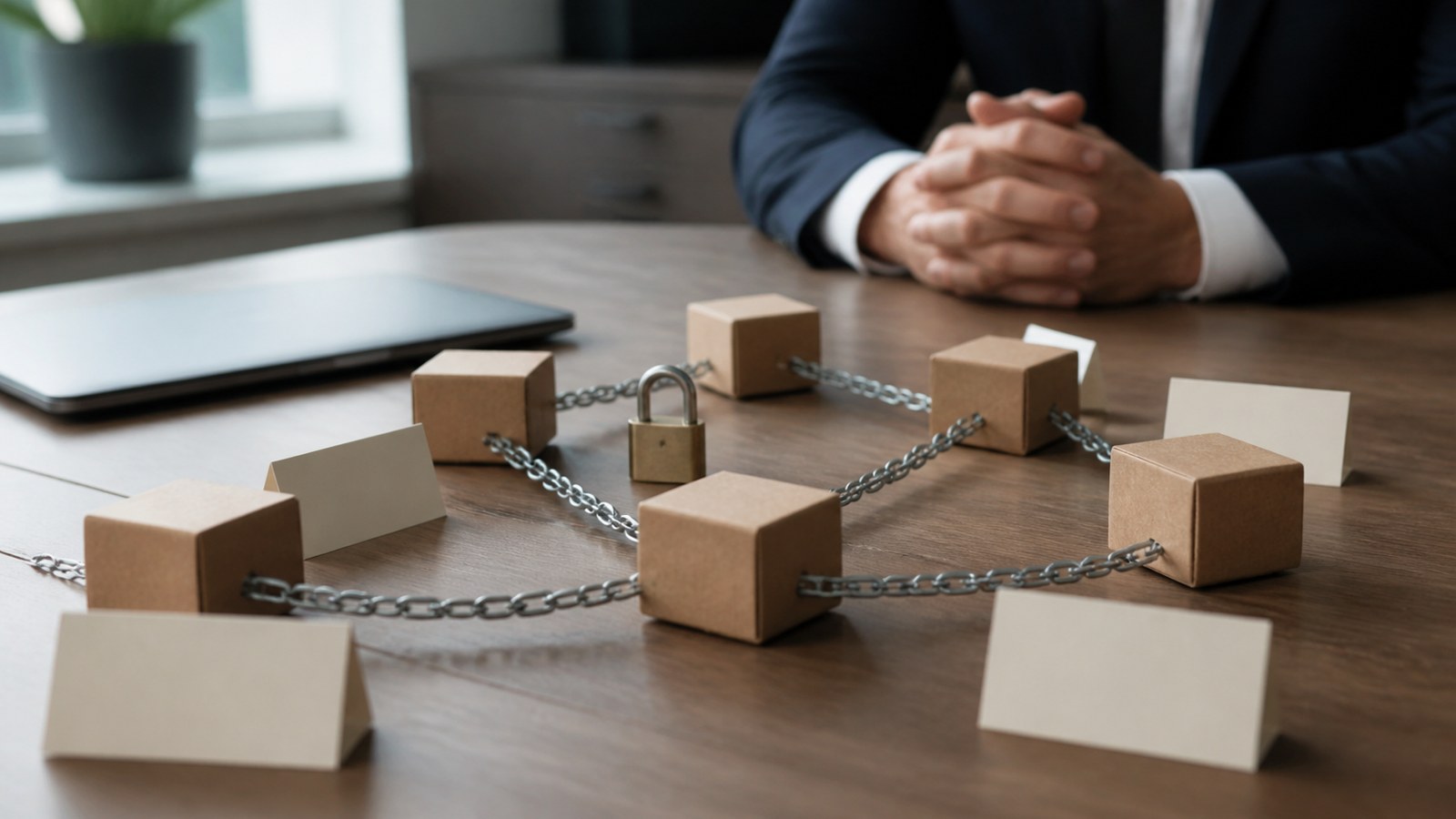
What Is Supply Chain Security? A Beginner’s Guide for Business Leaders
Supply chain security is the work of protecting the vendors, software, hardware, service providers, contractors, logistics partners, and digital connections that a business depends on. It matters because a company can be harmed through a partner it trusts, a tool it buys, a cloud service it uses, or a supplier that has access to sensitive systems or data.
A: Review the routine after suspicious activity, major life or business changes, and any time access expands.
A: Improvement looks like faster recognition, smaller impact, cleaner recovery, and fewer repeated surprises.
A: Start with the account, device, policy, person, or workflow that would create the most disruption if it failed.
A: Escalate when money, identity, regulated data, privileged access, children, customers, or business continuity may be affected.
A: The best evidence connects timing, ownership, logs, settings, user reports, and the most recent change.
A: False confidence usually appears when a familiar setting or tool is trusted without checking whether it still fits the risk.
A: Use plain language about consequence, choice, proof, and the next review date.
A: The fastest useful control is the one that reduces exposure while making later investigation easier.
A: Recovery needs protected access, current records, backup options, and a named person responsible for testing them.
A: Write down the timeline, decision owner, uncertainty, action taken, and follow-up date.
Why Supply Chain Security Matters
Most businesses no longer operate alone. They rely on payroll platforms, payment processors, managed IT providers, software vendors, cloud services, consultants, manufacturers, shipping partners, data processors, and specialized tools. Each connection can create value, but each connection can also create exposure. Supply chain security helps leaders understand which relationships are critical, what access those partners have, and how a disruption or compromise could affect operations.
The risk is not limited to large enterprises. A small company may depend on a single booking platform, accounting system, ecommerce provider, or outsourced IT firm. If that provider is breached or unavailable, the smaller business may lose revenue, customer trust, or access to key records. Supply chain security is therefore a business continuity issue as much as a technical issue.
Cyber supply chain risk also includes products and components. Software updates, open-source libraries, device firmware, cloud integrations, and remote support tools can all become paths into an organization. Leaders do not need to inspect every line of code personally, but they do need a process for deciding which suppliers deserve deeper review.
What Counts as the Cyber Supply Chain
The cyber supply chain includes any outside party, product, or service that can affect the confidentiality, integrity, or availability of business systems and data. A vendor that stores customer records is clearly in scope. So is a managed service provider with administrator access, a software platform used for authentication, a developer tool that touches source code, or a logistics system that controls orders and deliveries.
Access level is one of the most important details. A vendor with read-only access to public marketing data creates far less cyber risk than a vendor with remote administrator access to endpoints. A supplier that only ships office supplies is different from a supplier that maintains production equipment through a remote connection. Supply chain security begins by distinguishing those relationships instead of treating every vendor the same.
Dependency matters too. If the business cannot invoice customers, ship products, process payroll, unlock buildings, or support clients without a vendor, that vendor is operationally important even if it does not hold the most sensitive data. A strong supply chain review asks what happens if the supplier is breached, unavailable, dishonest, acquired, sanctioned, or unable to meet its obligations.
Core Controls for Vendor Risk
A practical supply chain program starts with vendor inventory. The business should know which vendors exist, who owns each relationship, what service they provide, what data or systems they touch, whether they use subcontractors, and how critical they are to operations. Without that list, security review becomes reactive and incomplete.
Risk tiering keeps the process manageable. Low-risk vendors may need basic contract terms and business approval. Medium-risk vendors may need security questionnaires, proof of insurance, data handling review, and access limits. High-risk vendors may need deeper evidence such as independent audit reports, incident notification terms, penetration test summaries, architecture discussions, or technical integration review.
Access control is where supply chain security becomes concrete. Vendors should receive only the access required for their work, and that access should be monitored, logged, reviewed, and removed when no longer needed. Shared accounts, permanent emergency access, unmanaged remote tools, and forgotten contractor logins are common weak spots.
Software and Update Risks
Software supply chain risk deserves special attention because modern applications are built from many dependencies. A business may use commercial platforms, open-source packages, browser extensions, APIs, code libraries, containers, and cloud services. A weakness in one component can move through many organizations when the component is widely used.
Businesses can reduce this risk by maintaining software inventories, tracking critical dependencies, patching supported products quickly, removing end-of-life software, controlling who can publish code, scanning for known vulnerabilities, and protecting build systems. For companies that develop software, secure development practices and review of third-party packages are part of supply chain security.
Updates require trust. A signed update from a known vendor is safer than an installer downloaded from an unknown link, but even trusted update channels need oversight for critical systems. Leaders should know which teams approve updates, how emergency patches are handled, and how the business would respond if a trusted supplier announced a compromise.
Contracts, Evidence, and Accountability
Contracts cannot prevent every incident, but they can define expectations before trouble starts. Useful terms may address security controls, breach notification timelines, subcontractor use, data location, audit rights, incident cooperation, encryption, access removal, business continuity, insurance, and data return or destruction at the end of the relationship.
Evidence matters because promises are easy to make. Depending on the risk level, a business may ask for security certifications, audit reports, vulnerability management summaries, disaster recovery evidence, penetration testing summaries, data protection details, or written security policies. The goal is not to collect documents for their own sake. The goal is to decide whether the vendor can be trusted with the specific work requested.
Accountability also belongs inside the business. Procurement, legal, security, privacy, IT, finance, and business owners may all need a role. If procurement buys tools without security review, or security reviews vendors without understanding the business need, decisions become weak. Supply chain security works when ownership is clear from selection through offboarding.
How to Start Without Slowing the Business
A business can begin with the vendors that matter most. Identify vendors with sensitive data, administrator access, remote connectivity, payment influence, customer impact, or high operational dependency. Review those first. Then define a lighter process for lower-risk vendors so the program does not become a bottleneck.
New vendor onboarding should include a few direct questions: what data will the vendor handle, what systems will it access, how critical is the service, who owns the relationship, what happens if the vendor is unavailable, and how access will be removed later. Those answers create a basic risk tier and guide the next review step.
Supply chain security is ultimately about knowing where trust has been extended. A company cannot eliminate every dependency, but it can understand which dependencies matter, require reasonable safeguards, limit access, monitor high-risk relationships, and prepare for disruption before a supplier problem becomes its own crisis.
Questions Leaders Should Ask Suppliers
Leaders do not need to become technical auditors to ask better supply chain questions. They can begin with plain business questions: what data will the supplier handle, which systems will it access, how will users authenticate, how quickly will the supplier report an incident, where will data be stored, and what happens if the supplier’s service is unavailable for several days?
For software and cloud vendors, the questions become more specific. Does the vendor support multifactor authentication and single sign-on? Can administrators enforce role-based access? Are logs available to customers? How are vulnerabilities handled? How are updates delivered? What security evidence can the vendor provide? Can customer data be exported or deleted at the end of the contract?
For suppliers with operational impact, continuity deserves attention. A manufacturer, logistics provider, payment processor, or managed IT firm may not hold the most sensitive data, but downtime could still stop the business. Leaders should understand the supplier’s recovery expectations, backup practices, alternate procedures, and incident communication process.
Supply Chain Incidents Are Often Trust Incidents
Supply chain attacks work because normal trust relationships are useful to attackers. A trusted vendor email may bypass suspicion. A legitimate software update may be installed quickly. A remote support tool may already be allowed through defenses. A contractor account may have access that internal employees forgot existed. These paths are dangerous because they look like normal business.
That does not mean companies should distrust every partner. It means trust needs boundaries. Vendors should have named accounts, limited permissions, monitored activity, and clear removal steps. Software should come from verified channels. Critical changes should require approval. Remote access should be logged and reviewed. These controls let companies work with partners without giving every partner unlimited room.
Communication is part of trust. If a supplier detects an incident, the customer needs timely notice, useful details, and cooperation. Contracts can define expectations, but relationships matter too. A vendor that communicates clearly during a difficult event is easier to work with than one that hides behind vague statements.
How Smaller Businesses Can Prioritize
Small businesses often cannot run a formal vendor risk department, but they can still prioritize intelligently. Start with the vendors that can touch money, customer data, employee data, administrator access, websites, email, cloud files, scheduling, inventory, or production. Those relationships deserve the first review because a problem there can create immediate harm.
Next, strengthen access. Use named accounts instead of shared logins, turn on multifactor authentication where available, remove old vendor users, and avoid giving broad administrator access when limited access will do. If an outside IT provider needs powerful access, make sure there is a clear contract, contact list, logging, and offboarding plan.
Finally, document the essentials. Keep a vendor list, renewal dates, contract contacts, support contacts, data handled, and access notes. This may sound basic, but it makes the business faster during an incident and more disciplined when buying new services.
The Business Value of Supply Chain Security
Supply chain security can feel like extra paperwork until a vendor outage or breach tests the company. Then the value becomes obvious. A prepared business knows who to call, what systems are affected, which customers may be involved, whether data moved, and how to continue operations. That preparation reduces confusion.
It can also improve buying decisions. Security review may reveal that one vendor offers stronger logging, better access controls, clearer breach notification, or more reliable recovery than another. Those differences affect long-term risk. The cheapest tool is not always the least expensive after downtime, fraud, or data exposure.
Good supply chain security helps a business grow with less hidden fragility. As the company adds vendors and services, it keeps track of trust, access, dependency, and accountability. That discipline makes outside partnerships safer and more useful.
Warning Signs of Weak Supply Chain Security
Weak supply chain security often shows up in small operational clues. No one can produce a current vendor list. Contractors share accounts. Vendor access survives long after a project ends. Procurement approves software before anyone reviews data or access. Security questionnaires are collected but never read. Incident contacts are outdated. These signs suggest the business is trusting partners without enough structure.
Another warning sign is overdependence on a single supplier with no recovery plan. If one provider controls email, backups, website hosting, remote support, or payment flow, leaders need to understand the consequences of downtime or compromise. Redundancy is not always affordable, but awareness and contingency planning are still possible.
Weak programs also treat supply chain risk as only a legal problem. Contract language helps, but security depends on working controls: limited access, monitored activity, tested recovery, current contacts, and honest evidence. The strongest review combines legal protection with operational readiness.
What Success Looks Like
A successful program gives leaders a clear picture of dependency. They know which suppliers are critical, which vendors hold sensitive data, which tools require administrator access, and which relationships need deeper oversight. They also know who owns each relationship inside the company.
Success is visible during onboarding and incidents. New vendors move through a consistent review, high-risk access is controlled, and incident communication does not depend on guesswork. When a supplier announces a breach, the company can quickly determine whether it is affected and what action to take.
Supply chain security is not about eliminating trust. It is about making trust deliberate, limited, monitored, and recoverable.