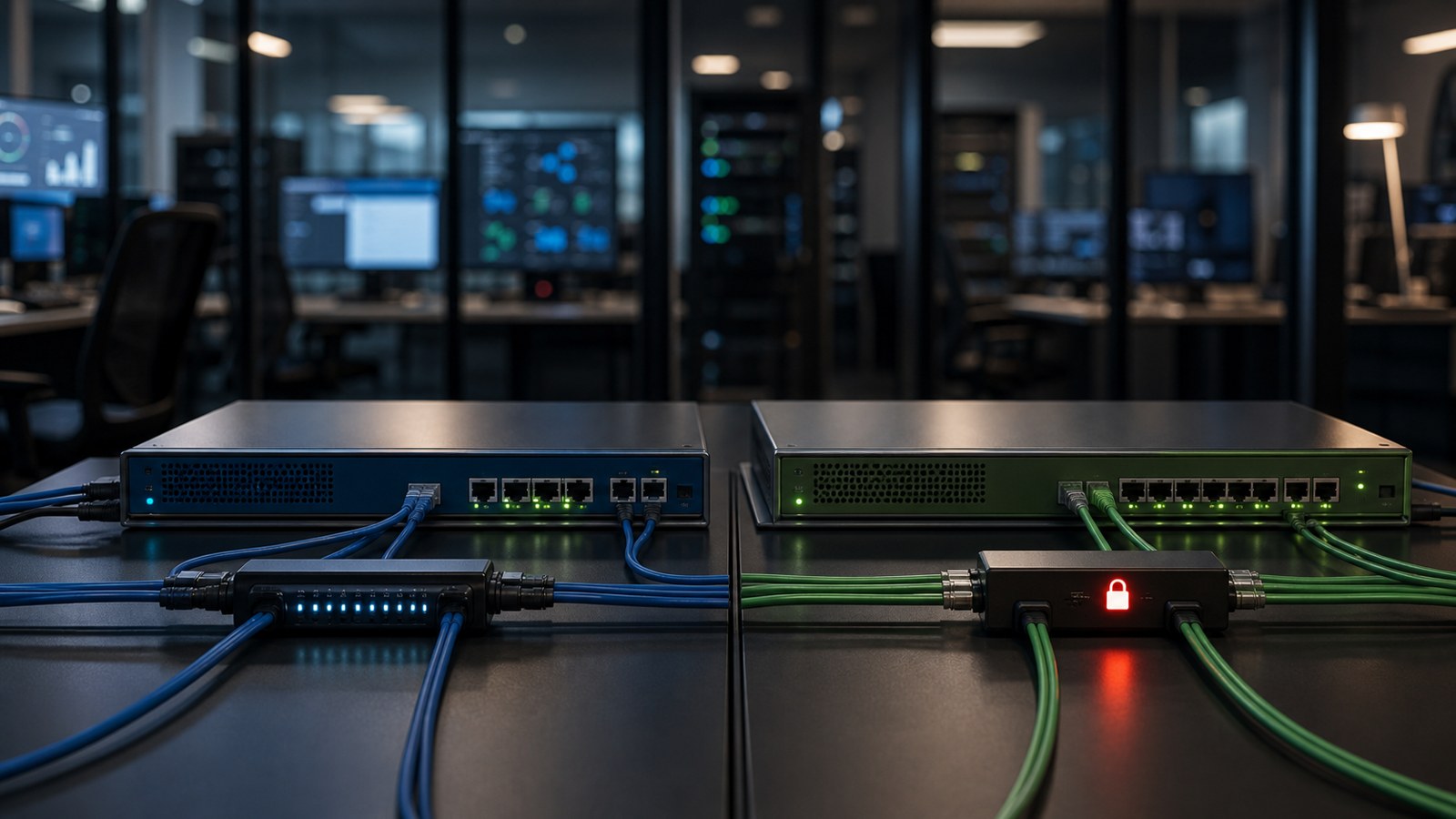
Cyber threats are no longer crude, predictable, or easily spotted. They are adaptive, intelligent, and increasingly automated. Attackers now blend stealth, speed, and sophistication, probing weaknesses across networks, cloud services, remote endpoints, and encrypted channels. To survive this era of relentless digital warfare, organizations need more than traditional perimeter protections. They need firewalls capable of analyzing behavior, understanding context, and blocking attacks before they strike. Next-generation firewalls (NGFWs) represent the culmination of decades of evolution in cybersecurity technology. They move beyond port-based filtering to deliver deep inspection, identity awareness, AI-driven intelligence, and unified threat prevention. Unlike the firewalls of years past, which simply allowed or denied traffic based on simple rules, NGFWs act as intelligent guardians—scanning every interaction, verifying every packet, and intervening instantly when malicious intent is detected. This guide explores exactly how next-generation firewalls detect, analyze, and stop today’s most dangerous threats. We’ll unpack the technologies behind them, the strategies they enable, and the ways they reinforce the fabric of modern cyber defense.
A: NGFWs add deep inspection, app awareness, identity integration, and IPS capabilities on top of classic filtering.
A: They can block exploit traffic, malicious downloads, command-and-control calls, and suspicious lateral movement—key parts of ransomware chains.
A: Many NGFWs embed IPS features, but you may still pair them with dedicated sensors for specialized or high-throughput needs.
A: It adds overhead, but proper hardware, selective inspection, and tuning keep performance within acceptable ranges.
A: At least quarterly, plus after major architectural changes, new apps, or significant security incidents.
A: They are a cornerstone, but should work alongside endpoint, identity, patching, and monitoring controls.
A: Yes. They enforce segmentation, identity-driven access, and continuous verification at strategic network points.
A: Start at internet edges, critical data center segments, and major cloud entry points handling high-risk traffic.
A: Regularly review logs, blocked threats, policy hits, and run controlled tests or red-team exercises.
A: Map current rules, identify risky “any-any” policies, plan segmentation, then phase in NGFW features gradually.
The Transformation of Firewall Technology
Firewalls began as simple packet filters built on one principle: block or allow traffic based on its source, destination, and port. Early firewalls couldn’t see inside packets, identify applications, or understand user context. They operated blindly, relying on static rules that attackers quickly learned to manipulate.
The explosion of cloud services, encrypted traffic, and remote access rendered these early models insufficient. Applications began using dynamic ports. Malware disguised itself as ordinary web traffic. Attackers infiltrated internal systems and moved laterally with ease. Organizations needed firewalls capable of seeing much deeper into network behavior—and responding automatically.
Next-generation firewalls emerged to solve this visibility crisis. They introduced deep packet inspection, application control, user identity awareness, and real-time threat intelligence. Suddenly, the firewall could understand what was communicating, who was communicating, and why the communication mattered. This shift marked the beginning of proactive firewall defense.
Deep Packet Inspection: Seeing the Truth Behind the Traffic
One of the defining capabilities of NGFWs is deep packet inspection (DPI), a method that allows firewalls to examine traffic beyond the superficial headers used by legacy devices. DPI reconstructs sessions, analyzes payloads, and identifies patterns that expose malicious behavior.
Rather than relying on port numbers or protocol expectations, NGFWs look directly at the content. They can recognize when an application is masquerading as another, identify suspicious commands, or detect payloads that resemble known exploits. DPI gives the firewall the vision it needs to distinguish safe interactions from harmful ones—even when attackers attempt to blend in with legitimate traffic. This ability to “see” traffic at every layer is crucial in a world where malware hides inside encrypted channels, collaboration apps, and web services that appear harmless at first glance.
Application Awareness: Controlling What Actually Matters
Traditional firewalls assumed a port equaled an application. That assumption fell apart as applications evolved, using multiple ports or shifting dynamically to bypass restrictions. With NGFWs, the firewall identifies applications based on signatures, behavior, and patterns—not port numbers.
This means organizations can create policies like:
Allow video conferencing tools only for verified employees
Block unauthorized file-sharing applications
Restrict social media access for specific user groups
Permit cloud storage uploads only for approved departments
Application awareness empowers organizations to align network behavior with business needs. It provides granular control that strengthens security and enhances productivity, eliminating unnecessary risk without stifling legitimate activity.
User Identity Integration: People, Not Just Packets
Next-generation firewalls understand that not all users are the same, and that traffic from a trusted engineer is different from traffic originating from a kiosk or guest network. To capture this nuance, NGFWs integrate directly with identity systems.
This allows policies to be written based on:
User roles
Departments
Devices
Security groups
Multi-factor authentication status
When firewalls understand who is creating the traffic, they can enforce least-privilege access far more effectively. User-aware policies prevent attackers from exploiting generic rules or gaining excessive access through stolen credentials.
NGFWs bring identity into the heart of network protection.
AI-Driven Threat Detection: Outsmarting Automated Attacks
The next wave of cyber threats is fueled by automation and artificial intelligence. Attackers use tools that adapt in real time, shifting patterns and payloads to avoid detection. Static signatures are no longer enough.
Next-generation firewalls incorporate machine learning and behavioral analytics to stay ahead of these evolving dangers. They continuously profile normal behavior across applications, users, and devices. When something deviates from the expected pattern—an unusual login time, a strange data transfer, or a suspicious internal connection—the NGFW takes notice.
By analyzing subtle indicators of compromise, NGFWs catch threats that would otherwise go undetected: zero-day exploits, insider misuse, encrypted malware, and stealthy command-and-control communications. AI transforms the firewall from a reactive tool into an adaptive, proactive defender.
Real-Time Threat Intelligence: Always Up to Date
Threat landscapes shift by the hour. New vulnerabilities emerge, malware evolves, and attackers develop fresh techniques. To keep pace, NGFWs tap into global threat intelligence networks that continuously feed them updated signatures, indicators of compromise, and attack patterns.
This creates a dynamic security fabric where the firewall is never outdated. As soon as new malware is identified somewhere in the world, NGFWs receive the information needed to detect and block it. This global collaboration dramatically increases the speed at which organizations can defend themselves against emerging threats. In this way, threat intelligence acts as the firewall’s memory—expanding constantly, learning continuously, and reacting instantly.
Stopping Encrypted Threats Through SSL/TLS Inspection
With nearly all modern traffic encrypted, attackers now hide malicious payloads inside secure tunnels. Without decryption, firewalls see nothing more than metadata—source, destination, and timing. This limited visibility leaves organizations vulnerable. Next-generation firewalls include SSL/TLS inspection capabilities that allow them to decrypt, analyze, and re-encrypt traffic transparently. This enables the firewall to identify hidden threats while preserving user privacy and application function. Encrypted malware, command-and-control traffic, and data exfiltration attempts cannot hide from NGFWs that inspect traffic at this deeper level.
Integrated Intrusion Prevention: Blocking Attacks in Real Time
A cornerstone of NGFW protection is its integrated intrusion prevention system (IPS). Unlike intrusion detection alone, which simply alerts analysts, IPS analyzes and blocks attacks as they occur.
The IPS engine inside NGFWs can:
Stop exploit attempts targeting known vulnerabilities
Enforce protocol compliance to block malformed packets
Terminate unauthorized internal connections
Prevent brute-force attempts and credential stuffing
Block traffic from known malicious sources
This real-time blocking is essential in environments where even seconds of exposure can lead to significant compromise.
With IPS, NGFWs act decisively—not just identifying threats but stopping them cold.
Lateral Movement Prevention: Protecting the Inside, Not Just the Perimeter
Modern attackers don’t simply break in—they explore, escalate, and spread. Once inside a network, they attempt to move laterally, exploiting internal systems until they reach valuable data or high-privilege accounts.
Next-generation firewalls counter this threat through segmentation and microsegmentation. By dividing networks into discrete zones and applying strict access policies between them, NGFWs limit how far attackers can travel. Even if one system is breached, NGFWs enforce policies that keep the attacker contained. This dramatically reduces the blast radius of attacks like ransomware, which thrive on unrestricted lateral movement. NGFWs guard not just the perimeter, but the entire digital ecosystem.
Cloud and Hybrid Network Integration
As businesses expand into cloud environments, firewalls must operate consistently across on-premises, virtual, and hybrid infrastructures. Next-generation firewalls are designed with this flexibility in mind.
Virtual NGFWs protect workload-to-workload communication, cloud APIs, and containerized applications. They integrate with cloud-native logging, identity services, and automation tools. Hybrid deployment models ensure consistent security regardless of where data travels or where users connect from.
This unified approach allows organizations to maintain strong security in environments that span data centers, SaaS platforms, and distributed remote workforces.
Behavioral Analytics and Zero Trust Enforcement
Zero Trust architectures require continuous verification, least privilege access, and constant monitoring of all traffic. NGFWs provide the enforcement layer necessary to make Zero Trust viable. By analyzing identity, device posture, user behavior, and application context, NGFWs enforce policies tailored to each interaction. They verify—not assume—that every connection is legitimate. Behavioral analytics expose insider threats, compromised accounts, and deviations inconsistent with normal usage. NGFWs serve as the control plane through which Zero Trust becomes operational reality.
Automation and Orchestration: Speed at the Scale of Threats
Cybersecurity teams are inundated with alerts, tasks, and investigations. NGFWs support automation and orchestration to reduce this burden.
Automated workflows allow NGFWs to:
Quarantine compromised hosts
Adjust rules dynamically
Block emerging threats instantly
Share intelligence with other tools
Trigger incident response actions
This automation ensures organizations react as quickly as attackers evolve, reducing dwell time and enhancing overall resilience.
The Future of Next-Generation Firewalls
Next-generation firewalls are still evolving. AI integration will deepen, offering predictive analysis that identifies threats before they appear. Cloud-native architectures will expand, creating unified protection across hybrid networks. Encrypted traffic inspection will become more intelligent and resource-efficient. Contextual awareness will extend to IoT devices, industrial systems, and advanced edge environments. Tomorrow’s NGFWs will not merely block threats—they will understand them, anticipate them, and adapt automatically. They will integrate seamlessly into a broader cybersecurity ecosystem fueled by data, intelligence, and automation. The firewall of the future is not just a defensive tool—it is a living, learning component of digital infrastructure.
A Smarter, Stronger, More Adaptive Line of Defense
Today’s threat landscape demands more than simple packet filtering. It requires insight, agility, and intelligence. Next-generation firewalls deliver all three. They provide deep visibility into every packet, control over every application, awareness of every user, and real-time defense against every phase of an attack.
By combining deep packet inspection, application awareness, AI-driven detection, and automated prevention, NGFWs have become indispensable guardians of modern networks. They safeguard cloud environments, remote infrastructures, and enterprise systems alike, forming the foundation of a resilient and adaptive cybersecurity strategy.
In a world where attackers innovate at unprecedented speed, NGFWs stand as a smarter, stronger, and more capable line of defense—one that evolves as fast as the threats it protects against.