Ransomware has become one of the most disruptive forces in modern business, government operations, and critical infrastructure. Despite historic investments in cybersecurity, new regulations, expanding security tools, and growing awareness, the problem feels worse—not better. Hospitals shut down elective surgeries, factories grind to a halt, police departments lose access to case files, schools cancel classes, and corporations face multimillion-dollar recovery timelines. Every year the attacks become faster, more coordinated, more financially devastating, and more psychologically manipulative. If ransomware has been “everyone’s top priority” for years, why does it continue to dominate? Why does it still cripple organizations across every industry? And more importantly—what can defenders finally do to break the cycle? This article explores the psychological, technical, operational, and economic realities behind ransomware’s persistent success, and outlines how defenders can reclaim the advantage in this high-stakes digital struggle.
A: IDS detects and alerts on suspicious activity, while IPS can automatically block or disrupt that activity inline.
A: Most mature environments use both: IDS for deep visibility and IPS for real-time enforcement at key points.
A: Properly sized hardware, smart policies, and selective inspection minimize performance impact while retaining strong protection.
A: Start in alert-only mode, tune noisy signatures, whitelist trusted behaviors, and iterate before enabling full blocking.
A: No. They complement firewalls by inspecting deeper layers and spotting attacks that basic rules may miss.
A: As frequently as your vendor releases them; automated updates keep pace with rapidly changing threats.
A: At internet edges, between critical segments, and in front of high-value applications or data stores.
A: Yes, if SSL/TLS inspection is enabled and properly configured, though this requires extra resources and care.
A: No. Combining signatures, anomalies, and policy rules yields better accuracy and coverage across attack types.
A: Begin with basic deployments in monitoring mode, learn your normal traffic patterns, then gradually introduce prevention policies.
The Shared Foundation of Intrusion Systems
Despite their differences, IDS and IPS share a common origin. Both technologies were born from a need to identify suspicious or malicious activity within network traffic. As cyberattacks began shifting from simple viruses to stealthy, multi-stage operations, organizations needed tools capable of noticing unusual patterns, unauthorized access attempts, or known attack signatures hidden within legitimate communication.
Intrusion systems operate by monitoring network packets, reconstructing sessions, and analyzing traffic attributes. They compare this traffic to known malicious signatures, behavioral anomalies, or policy-based expectations. In essence, both IDS and IPS act like digital security guards, constantly watching for signs that someone—or something—is attempting to break the rules. Where they differ is in how they respond when those signs appear.
Intrusion Detection Systems: The Watchtower
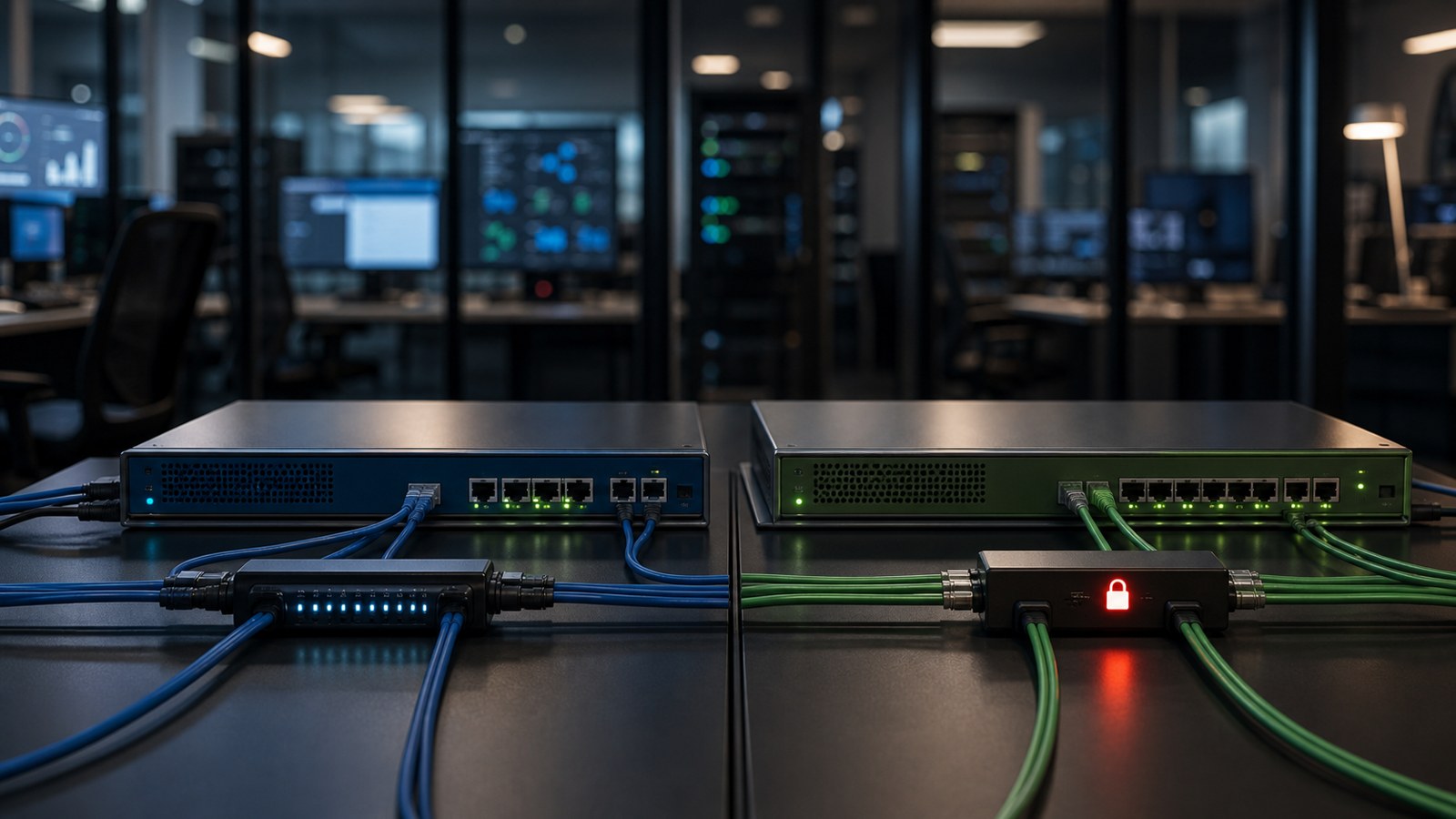
An Intrusion Detection System is the vigilant observer of your network. Think of it as a high-tech watchtower equipped with powerful binoculars, scanning the digital horizon for threats. IDS tools identify suspicious activity and generate alerts, but they don’t block or interrupt traffic. Their mission is awareness, visibility, and early warning.
IDS technology is fundamentally passive. It scans mirrored or tapped network traffic, reconstructing flows and identifying issues without interfering with production systems. This makes IDS a good fit for environments where performance, reliability, and transparency are critical. It ensures every packet is examined, and every abnormality is reported, but nothing is touched.
IDS alerts can include signs of malware activity, unauthorized access attempts, strange communication patterns, or traffic that appears to match known exploits. These alerts are typically sent to security operations centers, SIEM platforms, or automated response tools.
Where IDS excels is in depth of visibility. It provides a forensic-level view of what is happening inside a network, making it essential for threat hunting, incident response, compliance monitoring, and post-incident analysis. But detection alone does not stop an attack—it merely reveals it.
Intrusion Prevention Systems: The Shield
Intrusion Prevention Systems take the next step. Rather than simply observing, an IPS acts on the intelligence it receives. Instead of a watchtower, it is more like a powerful defensive shield that positions itself directly in the path of traffic. If IDS sounds like an alarm, IPS is the mechanism that locks the doors, raises the barricades, and blocks the intruder mid-action. IPS tools operate inline, meaning traffic passes directly through them rather than being mirrored for passive inspection. This placement gives IPS the ability to drop malicious packets, reset suspicious network connections, quarantine devices, or enforce predefined security policies instantly.
Inline operation makes IPS a highly effective real-time defender. It can automatically block exploit attempts, enforce protocol standards, detect malformed packets, and prevent reconnaissance activity. Organizations that face high levels of external threats—such as financial institutions, healthcare networks, government systems, and cloud platforms—depend on IPS as a frontline barrier against aggressive attacks. Of course, inline prevention brings risks: false positives can disrupt legitimate traffic. IPS must be finely tuned to avoid unnecessary downtime. But when configured correctly, it delivers unparalleled proactive protection.
How Detection and Prevention Work Behind the Scenes
To understand the true difference between IDS and IPS, it’s helpful to examine what happens inside each system as traffic flows through it.
Both IDS and IPS use multiple detection techniques. Signature-based detection compares traffic to known malicious patterns, identifying threats with high accuracy. Anomaly-based detection uses statistical models or machine learning to flag deviations from normal behavior. Policy-based rules define what traffic is allowed or expected, catching activity that violates organizational standards.
IDS logs the activity and generates alerts, often highlighting severity, attack type, target devices, and recommended responses. IPS uses the same intelligence but goes further—executing responses such as blocking IP addresses, terminating sessions, or adjusting firewall rules dynamically. Behavioral analysis, encrypted traffic inspection, application-layer visibility, and threat-intelligence integration all play a role in both systems. The core difference lies in how this information gets used: IDS informs, IPS acts.
The Role of IDS in Modern Security Operations
Even with advanced IPS technologies available, IDS remains indispensable. Organizations need visibility across their networks, especially as cloud, remote, and microservice environments become more complex. IDS provides the clearest window into what is happening behind the scenes. Security analysts rely on IDS to investigate incidents, detect long-term breaches, and uncover subtle attack patterns that may not trigger automatic blocking. IDS also plays a vital role in compliance, delivering audit trails and logging data that demonstrate policy adherence. In threat hunting operations, IDS acts as a repository of clues, enabling teams to trace attacks backward through time. Since IDS sees everything without touching production traffic, it is uniquely suited to deep analysis. Rather than being overshadowed by IPS, IDS forms the intelligence backbone of modern defense strategies.
Why IPS is Essential for Real-Time Protection
In contrast, IPS serves as the active defender. In a world where attacks unfold in milliseconds, organizations cannot rely solely on human analysts to respond. IPS shuts down malicious behavior before it causes damage. If a remote attacker attempts to exploit a known vulnerability in a web server, IPS can block the requests instantly. When malware attempts to communicate with command-and-control servers, IPS can disrupt the connection. When unauthorized users try to access restricted systems, IPS can enforce policy and terminate the session.
This speed and decisiveness make IPS valuable for environments with strict uptime requirements or high-risk exposure. Blocking attacks before they succeed is both safer and cheaper than responding after the fact. IPS acts as a digital shield, adapting to threats as they emerge and preventing attackers from gaining a foothold in the network.
Where IDS and IPS Overlap—and Why You Need Both
The most powerful cybersecurity strategies do not choose one or the other—they integrate both. IDS provides the depth of insight needed to understand threats, while IPS delivers the real-time protection necessary to stop them. Together, IDS and IPS create a full-spectrum defense system. IDS gives operators a continuous stream of threat intelligence. IPS uses that intelligence to take action. IDS reflects what has happened; IPS influences what will happen next. Modern security platforms often combine both capabilities into a single system known as IDPS—Intrusion Detection and Prevention System. This unified approach simplifies deployment and helps ensure visibility and control remain tightly synchronized. The key is balance. Detection without prevention leaves gaps attackers can exploit. Prevention without detection risks blind spots and false positives. The strongest networks rely on both inputs to achieve clarity and resilience.
Tuning and Optimization: Where the Real Skill Lies
Deploying IDS and IPS is only the beginning. The real challenge comes from tuning these systems, understanding their alerts, and refining their policies. IDS tuning involves filtering noisy signatures, adjusting anomaly thresholds, and integrating data with SIEM platforms. Analysts must understand the normal behavior of their network to distinguish harmless anomalies from real threats.
IPS tuning demands careful balancing between security and availability. Too strict, and legitimate traffic may be blocked. Too lenient, and attackers may slip through unnoticed. Organizations often deploy IPS in monitoring mode before switching to full blocking mode to reduce the risk of disruption. In both cases, the human element remains crucial. Expert tuning transforms intrusion systems from raw data generators into sharp, reliable defenders.
The Impact of Encryption on IDS and IPS
Encryption enhances privacy, but it also complicates intrusion detection and prevention. Encrypted traffic hides payloads that may carry malicious content. Without decryption, IDS and IPS can see only metadata—source, destination, timing, and volume. To maintain visibility, many modern systems support SSL/TLS inspection. This capability decrypts traffic, analyzes it, and re-encrypts it before forwarding. However, this introduces performance demands and potential privacy concerns. Organizations must balance security needs with user trust when implementing encrypted traffic inspection. Threat actors increasingly hide malware within encrypted channels, making visibility more important than ever. IDS and IPS must evolve to keep up with this growing challenge.
IDS, IPS, and Zero Trust Architecture
Zero Trust—“never trust, always verify”—has transformed modern security. IDS and IPS play central roles in this philosophy by continuously validating user behavior, device posture, and system interactions. IDS provides the feedback loop necessary for Zero Trust decisions. IPS enforces those decisions in real time.
By monitoring east-west traffic inside the network, intrusion systems help ensure that even internal systems are scrutinized as thoroughly as external ones. Zero Trust is not a product but a strategy. IDS and IPS provide the eyes and hands that make it work.
Choosing the Right Mix of Detection and Prevention
There is no one-size-fits-all approach to intrusion defense. The ideal mix depends on an organization’s risk tolerance, network architecture, compliance requirements, and resource availability. Organizations with strict uptime demands might choose to deploy IPS conservatively, with more emphasis on IDS for deep visibility. High-risk industries, such as finance or healthcare, may adopt aggressive IPS policies to reduce exposure to attack. Cloud-heavy environments may rely on virtual or distributed IDPS solutions integrated directly into cloud platforms. The best approach is layered, adaptable, and informed by ongoing monitoring, testing, and analysis.
The Future of Intrusion Technology
As cyber threats evolve, IDS and IPS systems continue to grow more intelligent. Machine learning models now detect subtle behavior patterns that signature-based systems would never recognize. Cloud-native intrusion systems integrate seamlessly into distributed architectures. Automated response platforms use IDS data to adjust IPS policies in real time.
The line between detection and prevention continues to blur as systems become more adaptive. But the core distinction remains: IDS observes, IPS acts. This dynamic will define cybersecurity strategies for years to come.
Two Sides of the Same Shield
Intrusion Detection Systems and Intrusion Prevention Systems are more than security tools—they are essential pillars of modern network defense. Understanding their differences, strengths, and ideal uses gives organizations the clarity needed to build a resilient and strategic defense posture.
IDS brings visibility, insight, and warning. IPS brings speed, enforcement, and protection. When combined, they form a powerful shield capable of identifying threats, stopping attacks, and revealing the stories hidden inside network traffic.
In a world where cyber threats never rest, the real difference between detection and prevention is not a choice—it is a partnership. Organizations that embrace both approaches stand stronger, see clearer, and respond faster in the face of evolving digital danger.